How to Write a Neighbor Eulogy for Someone Who Became Family

Some people become important through big life events. Others become important because they were there, day after day, in the ordinary rhythm of home.
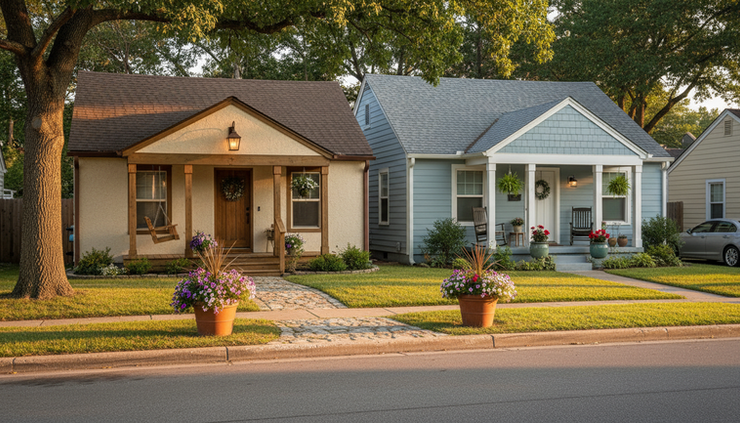
A neighbor can become part of your life in quiet ways. The wave from the driveway. The check-in after a storm. The borrowed ladder. The plate of food left on the porch. The laugh over the fence. The years of watching children grow, pets age, gardens change, holidays come and go, and streets fill with familiar faces.
So when it’s time to write a eulogy for a neighbor who truly became family through years of closeness, it can feel hard to explain. The relationship may not fit neatly into a title. They weren’t a parent, sibling, spouse, or cousin. But they may have been part of your daily life in a way that mattered deeply.
A good neighbor eulogy honors that truth without overstating it. It shows the relationship through real moments, specific memories, and the steady presence that made them unforgettable.
Start with the honest shape of the relationship
The best answer to “How do you write a eulogy for a neighbor who became family?” is this:
Write about how the relationship grew. Show the small moments that made the bond real. Describe who they were in everyday life, what they meant to the neighborhood, and how their presence became part of home.
That kind of tribute doesn’t need grand claims. It needs truth.
If the person truly became family through years of shared life, say why. Maybe they came to every birthday party. Maybe they had a key to the house for emergencies. Maybe they were the first call when something went wrong. Maybe they stood in the driveway talking long after the mail had been picked up. Maybe they watched the kids grow from toddlers on bikes to adults pulling into the same driveway for visits.
Those details do the work.
Instead of saying:
“She was like family to us.”
You can say:
“Over the years, she became part of our family’s daily life. She knew our children’s names, remembered every graduation, came over on holidays, and checked on us whenever the lights were off longer than usual.”
That’s stronger because it gives the listener something to see.
Instead of saying:
“He was always there for everyone.”
You can say:
“When the power went out, he checked on the older neighbors first. When someone needed a tool, he knew exactly where it was. When a new family moved in, he was usually the first person to introduce himself.”
That kind of detail builds trust. It also protects the eulogy from sounding exaggerated.
A eulogy for a neighbor should answer a few simple questions:
How did the relationship begin?
What made this person part of everyday life?
What qualities did they show over time?
What memories best reveal their character?
What will feel different now that they’re gone?
A close neighbor funeral speech doesn’t have to sound formal. In fact, it often works better when it sounds personal, warm, and specific.
Name the role they played
A neighbor who became family may have filled many roles. They might have been a trusted friend, a second grandparent figure, a steady helper, a porch companion, a holiday guest, a walking partner, or the person who made the whole block feel connected.
Try to name that role in plain language.
For example:
“He started as the man next door. Over time, he became the person we trusted with our spare key, our worries, our family stories, and more Sunday dinners than we can count.”
Or:
“She wasn’t related to us by blood, but she became part of the way our family lived. Her kitchen door was open, her advice was honest, and her presence made this street feel like home.”
Use words that match the actual relationship. If the relationship was warm but not deeply intimate, honor that too.
For example:
“We may not have shared every part of life, but we shared something rare. We shared years of kindness, conversation, and trust across a fence that often felt more like a bridge.”
That line respects the bond without pushing it beyond what was true.
Keep the tone balanced
A neighborhood memorial tribute should feel sincere, not polished to the point of distance. It’s okay to include humor, as long as it’s kind and fitting.
Maybe they were known for mowing early, giving strong opinions about tomato plants, feeding every stray cat, decorating too much for Halloween, or insisting their potato salad was better than anyone else’s. If that was part of their charm, include it.
Small quirks often make a tribute feel real.
Just be careful with private stories, conflicts, or anything that may embarrass the family. If in doubt, leave it out or soften it.
A good rule is this: share memories that the family would be glad to hear repeated.
Gather memories from ordinary moments
The most meaningful material for a neighbor eulogy often comes from everyday life. Don’t wait for one dramatic story. Look at the pattern of the relationship.
A neighbor’s kindness may have shown up in small, steady ways:
Bringing in trash cans after pickup
Shoveling snow from a walkway
Watering plants during vacations
Keeping an eye on the house
Sharing garden vegetables
Sitting outside together after dinner
Helping during a storm, illness, fire, flood, or other emergency
Remembering birthdays, holidays, and school milestones
Showing up at cookouts, block parties, and celebrations of life
Welcoming new neighbors with conversation or food
These details may seem simple, but they reveal character. Reliability is often quiet. Generosity often looks like someone doing what needed to be done without making a speech about it.

Ask questions that bring real stories forward
If your mind feels blank, use questions. Don’t try to write yet. Just gather.
Here are useful memory-gathering questions:
When did we first meet?
What was my first impression of them?
When did they stop feeling like just a neighbor?
What regular conversations did we have?
What did we often talk about across the fence, porch, driveway, or sidewalk?
Did we share meals, holidays, cookouts, coffee, or celebrations?
Did they help during an emergency or hard season?
Did we help them in a meaningful way?
What neighborhood traditions did they take part in?
What did they do that made the street feel warmer or safer?
What did children, grandchildren, or pets associate with them?
What phrase, habit, recipe, joke, or routine reminds me of them?
What did they notice that others might have missed?
What did they teach by example?
What will I miss on an ordinary day?
Ask other neighbors too, if it feels appropriate. One person might remember their holiday lights. Another might remember how they checked mail for traveling families. Someone else might remember their laugh from the driveway or how they knew every dog’s name.
You don’t need to include every story. You’re looking for a few moments that show the whole person.
Look for patterns in the memories
After you gather memories, read them again and ask what they reveal.
A story about checking on people after storms may show dependability.
A story about bringing soup to a sick neighbor may show care.
A story about teasing the kids for riding bikes too fast may show humor and affection.
A story about hosting the same holiday gathering each year may show tradition.
A story about welcoming new families may show community connection.
This helps the eulogy feel organized. You’re not listing random moments. You’re showing who they were.
For example:
“The stories may sound small on their own. A borrowed tool. A plate left on the porch. A ride to the doctor. A lawn watered while someone was away. But together, they show the kind of person he was. He paid attention. He showed up. He made people feel less alone on this street.”
That’s the heart of a longtime neighbor remembrance. The weight comes from years, not from exaggeration.
Use the right level of detail
Specific memories make the eulogy believable and personal. Still, keep private details private.
Good details include:
A favorite chair on the porch
A familiar greeting
A recipe they always made
A holiday decoration they put up every year
A garden, workshop, driveway, or kitchen table where conversations happened
A recurring act of help
A neighborhood tradition they cared about
Details to avoid include:
Private family disagreements
Medical details unless the family has openly shared them and wants them mentioned
Financial hardship
Anything that sounds like gossip
Stories that make the speaker look better than the person being honored
The goal is to honor, not explain everything.
Build the eulogy around a simple structure
A eulogy doesn’t need a complicated outline. Most strong tributes follow a clear path: opening, relationship, stories, qualities, gratitude, closing.
Here’s a simple structure that works well for a community friendship eulogy.
Open with who they were to you
Start by naming the relationship directly.
Examples:
“My name is Anna, and I had the privilege of living next door to Maria for 18 years.”
“I’m James from across the street. To some, Mr. Thompson was a neighbor. To our family, after so many years of shared meals, emergencies, holidays, and everyday talks, he became part of our family’s story.”
“I’m here today as a neighbor, a friend, and someone whose life was made better by having Linda just a few steps away.”
Keep it short. The opening should help listeners understand why you’re speaking.
Tell how the connection grew
After the opening, explain the relationship in a few sentences.
This is where you can show how an ordinary neighbor relationship became something deeper.
For example:
“At first, our conversations were simple. We talked about the weather, the lawn, the mail, and whose tree was dropping leaves into whose yard. Then the conversations got longer. We started sharing coffee on Saturday mornings. She came to our cookouts. We checked on each other during storms. Somewhere along the way, the fence between our yards stopped feeling like a boundary.”
That kind of writing feels natural because it follows the truth of many neighborhood friendships. They rarely begin with a big announcement. They grow through repetition, trust, and time.
Choose two or three stories
A eulogy doesn’t need ten stories. Two or three strong memories are usually enough.
Choose stories that show different parts of the person:
A story about help
A story about humor
A story about tradition
Shows care, reliability, or courage
Shows personality and warmth
Shows their place in the neighborhood
For example, you might tell one story about how they helped during a storm, one about their yearly holiday decorations, and one about the way they always made time for children on the block.
Before using any example, replace it with your own true memory. The best eulogy never relies on invented scenes.
Connect the stories to qualities
After each story, say what it showed.
For example:
“That was Barbara. She didn’t wait for someone to ask. If she saw a need, she quietly found a way to help.”
Or:
“That story still makes us laugh, but it also says something true about him. He noticed people. He made room for them. He could turn an ordinary afternoon into something we still talk about years later.”
This step matters because it helps listeners understand why the memory matters.
Close with gratitude and loss
The ending should be simple. You don’t have to force a big final line.
You can say:
“We’ll miss seeing him on the porch. We’ll miss his wave, his laugh, and the way he made this street feel watched over in the best sense of the word. We’re grateful for the years we had with him, and we’ll carry those memories with us.”
Or:
“Her absence will be felt in the small daily places, the quiet driveway, the garden fence, the empty chair at the block party. But so will her influence. She taught us how much one person can shape a neighborhood through kindness, attention, and steady friendship.”
That’s enough. Honest endings often stay with people longer than ornate ones.

Write with warmth without stretching the truth
When someone dies, it’s natural to want to honor them generously. That’s a good instinct. But a tribute becomes more powerful when it stays grounded.
You don’t need to say they were flawless. You don’t need to speak for the whole town. You don’t need to make the relationship sound bigger than it was.
Instead, let the truth carry the tribute.
Use precise language
Try these swaps:
Instead of saying | Try saying |
“They were the best neighbor anyone could ask for.” | “They were the kind of neighbor who noticed when someone needed help.” |
“They were loved by all.” | “Many of us knew their kindness in personal, practical ways.” |
“They were always there.” | “Again and again, they showed up when it mattered.” |
“They were like family.” | “Over the years, through shared meals, holidays, emergencies, and daily friendship, they became part of our family’s life.” |
“No one will ever be the same.” | “Their absence will be felt in the routines and places they helped shape.” |
This approach sounds more human. It also keeps the eulogy respectful.
Let ordinary examples carry emotional weight
In a neighborhood memories eulogy, the ordinary moments often mean the most.
A person’s character may show up in how they:
Remembered which child had a recital
Asked about a parent who had been ill
Shared extra tomatoes from the garden
Offered a ride when a car wouldn’t start
Sat outside after dinner and made time to listen
Took part in holiday traditions year after year
Kept watch when someone was traveling
Called if something seemed wrong
These memories may not sound dramatic, but they’re often what people miss most.
For example:
“I keep thinking about the way he would pause at the mailbox and look over, not just to wave, but to really check in. If he asked how you were, he waited for the answer. That small habit said a lot about him.”
That’s a strong line because it shows attention.
Or:
“Every December, she put the same wreath on the door and the same lights along the porch. It became one of those small neighborhood signs that the season had started. We didn’t realize how much we counted on it until we imagined the street without it.”
That works because it connects a tradition to shared memory.
Include humor with care
Humor can be beautiful in a celebration of life for a neighbor, especially when it reflects how the person really was.
Good humor is affectionate:
“He believed no lawn mower should be started after 9:00 a.m., which meant most of us heard his before we finished our coffee.”
“She claimed she didn’t keep track of neighborhood business, but somehow she always knew whose dog had gotten loose and whose tomatoes were finally ripe.”
“He gave advice freely, whether you asked for it or not, and most of the time, we had to admit he was right.”
Keep the tone kind. If the joke needs a long explanation, skip it. If it could hurt the family, skip it.
Speak to the family with respect
Even when you’re speaking as a neighbor, remember that family members are hearing your words in a deeply personal way.
It can be meaningful to say:
“Thank you for sharing him with us all these years. We know he belonged first to you, and we’re grateful that our neighborhood got to know the generous, funny, steady person you loved.”
That line honors both the family’s grief and the neighborhood’s loss.
It’s also a gentle way to avoid overstepping.
Use sample wording to get started
Sometimes the blank page is the hardest part. Use these samples as starting points, then add true names, places, and memories.
Short neighbor eulogy example
“My name is David, and I lived next door to Elaine for more than 20 years. At first, we were simply neighbors who waved from the driveway and talked about the weather. Over time, that changed. We shared meals, watched each other’s homes, traded stories across the fence, and became part of each other’s daily lives. Elaine had a way of noticing people. If someone was sick, she checked in. If a child on the block had a big day, she remembered. If a new family moved in, she made sure they felt welcome. Her kindness wasn’t loud. It was steady. I’ll miss seeing her on the porch. I’ll miss her laugh, her honesty, and the feeling that someone nearby was paying attention. Our street is better because she was part of it, and I’m grateful for every year we had as neighbors and friends.”
Longer neighbor tribute example
“I’m honored to speak today as someone who lived across the street from Robert for many years. When we first met, our conversations were the usual kind neighbors have. We talked about the weather, the trash pickup, and whose tree branches were growing too far over the sidewalk. But Robert had a way of turning small conversations into real friendship. A quick wave became a few minutes at the mailbox. A few minutes became coffee in the driveway. Before long, he wasn’t just the man across the street. He was someone we trusted, counted on, and looked forward to seeing. One of the things I’ll remember most is how reliable he was. If a storm came through, Robert checked on people. If someone needed a ladder, he had one ready. If a child lost a ball in his yard, he returned it with a smile and usually a joke. He didn’t make a show of helping. He simply paid attention and acted. He also brought humor to ordinary days. He had strong opinions about lawns, sports, and the right way to grill, and he shared those opinions freely. But behind the teasing was warmth. He made people feel included. He made the block feel less like a row of houses and more like a community. To his family, thank you for sharing him with us. We know your loss is personal in a way we can’t fully speak to. But we hope it brings some measure of meaning to know that his life reached across driveways, sidewalks, fences, and years. We’ll miss Robert in the everyday places. We’ll miss the wave from the porch, the voice from across the street, and the comfort of knowing he was nearby. We’ll remember him with gratitude, and we’ll carry forward the kind of neighborliness he showed us so well.”
Opening lines you can adapt
“I’m speaking today as a neighbor, but that word doesn’t fully explain what they came to mean to us.”
“Our friendship began with a wave and grew through years of ordinary kindness.”
“Some relationships are built around daily life, and that’s what made this one so meaningful.”
“They helped make our street feel less like a place we lived and more like a place we belonged.”
“Their kindness showed up in practical ways, and those are the memories that stay with me.”
Closing lines you can adapt
“We’ll miss them in the small routines where their presence meant so much.”
“Their life reminds us that community is built one conversation, one favor, and one act of care at a time.”
“We’re grateful for the years of friendship, the memories, and the steady kindness they gave so freely.”
“The neighborhood will feel different without them, but it will always carry their mark.”
“May we honor them by noticing one another the way they noticed us.”
Get help if the words are hard to find
Writing about a neighbor who became family through years of shared life can be emotional. You may know exactly what they meant, but still struggle to put it into words. That’s common, especially when the relationship was built from many small moments rather than one easy story.
If you need help writing an eulogy, call toll-free at 1-800-819-5466, and the team will gladly write it for you.
IWriteEulogies.com offers online eulogy help for families, friends, and neighbors across the country. The process starts with a brief questionnaire that gathers meaningful moments, favorite stories, personal qualities, relationship details, and the tone you want. From there, a writer creates an original, polished tribute that reflects the real person and the real relationship.
That can be especially helpful for a personalized eulogy writing project where the story includes everyday neighborhood details, shared meals, holidays, helping during emergencies, watching children grow, and years of friendship that may be hard to summarize.
The service includes:
First drafts in 2 to 4 hours
Short and long tribute options
Revisions so the tribute feels right
Review before final use
Strict confidentiality
Original writing that is never reused
A 100% satisfaction guarantee
This can help whether you need a short remembrance, a longer speech, or a polished neighborhood memorial tribute for a service, gathering, or celebration of life.

If you’d rather have support shaping the tribute, you can get compassionate, confidential help from IWriteEulogies.com.
A neighbor tribute doesn’t have to explain every year or every feeling. It just has to tell the truth with care. Start with the real relationship. Choose a few specific memories. Show their kindness, humor, reliability, and place in the community through moments people can recognize.
The most meaningful line may not be the fanciest one. It may be the simple truth that, because they lived nearby and cared well, home felt different in the best possible way.


